
-

3M™ 021200-37995 Scotch-Weld™ Yellow EC-1252 Tamper Proof Sealant - 5 oz Tube - 36 Each
3M™ 021200-37995 Scotch-Weld™ Yellow EC-1252 Tamper Proof Sealant - 5 oz Tube - 36 Each
PART #: SGP210148-X36MFR PART #: 7100107593Our Price: $6,556.68 (36 Each)QTY: Add to Cart -

3M™ Aerospace AC-350 B-1/2 Dark Gray AMS-S-8802D Class B-1/2, Type II Spec Fuel Tank & Fuselage Sealant - Quart Kit - 9 Each
3M™ Aerospace AC-350 B-1/2 Dark Gray AMS-S-8802D Class B-1/2, Type II Spec Fuel Tank & Fuselage Sealant - Quart Kit - 9 Each
PART #: SGP87730-X9MFR PART #: 7010370386Our Price: $3,529.35 (9 Each)QTY: Add to Cart -

PPG Aerospace® PR-1776M B-4 Brown PRC Standard Spec Low Weight Fuel Tank Sealant - 6 oz 654-SemKit - 2000 Each
PPG Aerospace® PR-1776M B-4 Brown PRC Standard Spec Low Weight Fuel Tank Sealant - 6 oz 654-SemKit - 2000 Each
PART #: SGP192482-X2000MFR PART #: 1776M004CA654SKOur Price: $199,980.00 (2000 Each)QTY: Add to Cart -

Flamemaster CS-5500CI B-1/2 Gray AMS-3265E (no QPL) Spec High Temperature Fuel Tank & Fuselage Sealant - 6 oz (3.5 fl oz) Cartridge Kit - 24 Each
Flamemaster CS-5500CI B-1/2 Gray AMS-3265E (no QPL) Spec High Temperature Fuel Tank & Fuselage Sealant - 6 oz (3.5 fl oz) Cartridge Kit - 24 Each
PART #: SGP169366-X24MFR PART #: CS5500CIB1-2Our Price: $1,295.76 (24 Each) QTY: Add to Cart
 -
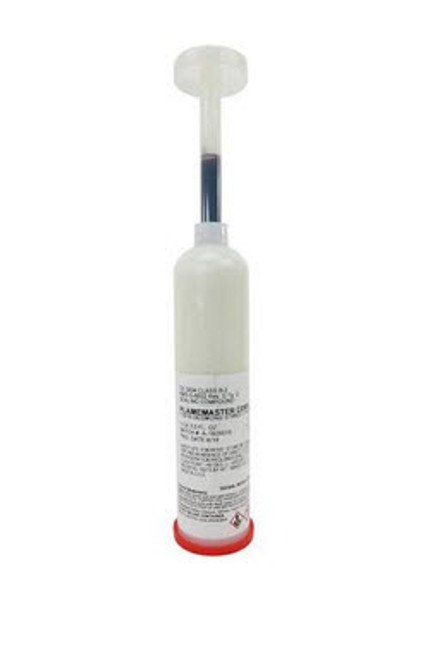
Flamemaster CS 3201 A-2 Black AMS-S-7124B (no QPL) Spec Fuel Tank & Cabin Sealant - 6 oz (3.5 fl oz) Cartridge Kit - 60 Each
Flamemaster CS 3201 A-2 Black AMS-S-7124B (no QPL) Spec Fuel Tank & Cabin Sealant - 6 oz (3.5 fl oz) Cartridge Kit - 60 Each
PART #: SGP205056-X60MFR PART #: CS3201A2BLK6OZOur Price: $5,166.00 (60 Each)QTY: Add to Cart -

Henkel TEROSON® SI 9160 CL™ Clear RTV Silicone Adhesive Paste - 300 mL (10.15 oz) Cartridge
Henkel TEROSON® SI 9160 CL™ Clear RTV Silicone Adhesive Paste - 300 mL (10.15 oz) Cartridge
PART #: SGP33434MFR PART #: 475372Our Price: $9.12 (Each)
QTY: Add to Cart -

Naftoseal® MC-780 Class B-1/2 Gray AMS 3281 Spec Fuselage & Fuel Tank Sealant - TechKit 55 (58 ccm) - 24/Case
Naftoseal® MC-780 Class B-1/2 Gray AMS 3281 Spec Fuselage & Fuel Tank Sealant - TechKit 55 (58 ccm) - 24/Case
PART #: SGP210855-X24MFR PART #: 50638644Our Price: $1,575.36 (24/Case)QTY: Add to Cart -

ROYAL® WS-8010 B-1/2 Red AMS-3284 Type I Spec Access Door Sealant - Quart Kit - 8/Case
ROYAL® WS-8010 B-1/2 Red AMS-3284 Type I Spec Access Door Sealant - Quart Kit - 8/Case
PART #: SGP160421-X8MFR PART #: C0147-C0147FOur Price: $1,420.00 (8/Case)
QTY: Add to Cart -
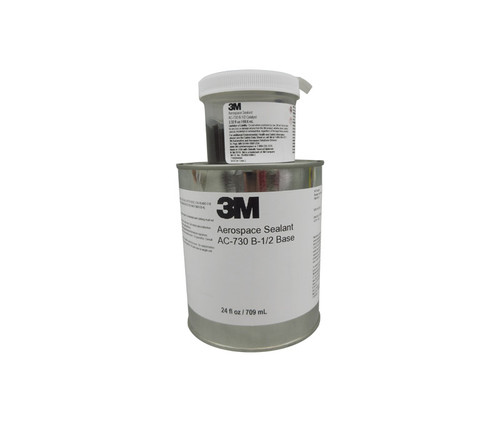
3M™ Aerospace AC-730 B-1/2 Brown Corrosion Inhibitive Polysulfide Fuselage Sealant - Quart Kit - 9/Case
3M™ Aerospace AC-730 B-1/2 Brown Corrosion Inhibitive Polysulfide Fuselage Sealant - Quart Kit - 9/Case
PART #: SGP87906-X9MFR PART #: 7100094684Our Price: $4,061.43 (9/Case)QTY: Add to Cart -

Henkel 57141 LOCTITE® 571™ Letter Grade HVV Thread Sealant - 250 mL (8.45 oz) Bottle - 10/Pack
Henkel 57141 LOCTITE® 571™ Letter Grade HVV Thread Sealant - 250 mL (8.45 oz) Bottle - 10/Pack
PART #: SGP52706-X10MFR PART #: 234479Our Price: $1,839.30 (10/Pack)QTY: Add to Cart -
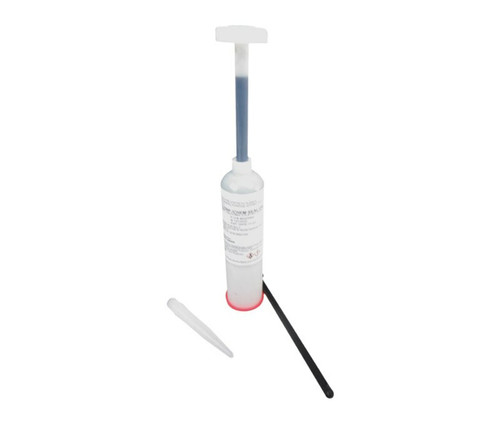
Flamemaster CS 5500 A-1/2 Gray AMS-3276E Spec High Temperature Fuel Tank & Fuselage Sealant - 6 oz (3.5 fl oz) Cartridge Kit - 24/Case
Flamemaster CS 5500 A-1/2 Gray AMS-3276E Spec High Temperature Fuel Tank & Fuselage Sealant - 6 oz (3.5 fl oz) Cartridge Kit - 24/Case
PART #: SGP207977-X24MFR PART #: CS5500A1-2-6OZOur Price: $1,270.56 (24/Case)QTY: Add to Cart -

3M™ Aerospace AC-735 B-1/2 Brown Non-Chromate Corrosion-Inhibitive Polysulfide Fuselage Sealant - 2 oz Kit - 24/Case
3M™ Aerospace AC-735 B-1/2 Brown Non-Chromate Corrosion-Inhibitive Polysulfide Fuselage Sealant - 2 oz Kit - 24/Case
PART #: SGP87708-X24MFR PART #: 7100017346Our Price: $2,262.24 (24/Case)QTY: Add to Cart
Don't leave your aircraft exposed to the elements. Make sure it's sealed and ready to fly by shopping at SkyGeek for all types of aircraft sealants, sealant primers and sealant removers at our low everyday prices. We carry a huge selection of top-quality aviation sealants and sealant accessories to choose from, so you'll always have access to the best products for your project. Whether you're sealing an electrical box, a fuel tank or just putting a corrosion-resistant coating on a sensitive component, you'll find the products you need to get the job done at SkyGeek. Our large selection of top-quality aviation sealants and applicators that are perfect for all of your sealing needs.
Sealants are some of the most versatile and most often-used products in the aviation industry. Whether you're closing up gaps, reinforcing your fuel tank or stripping away old sealant, you'll find the products you need to get the job done at SkyGeek. We offer a wide range of different sealants to choose from that are made for almost every part of an airplane or other aerospace equipment. We carry sealants for general purpose applications, sealants for high-temperature uses and several varieties of fuel-resistant sealants for making sure your fuselage is completely leak-proof. Provide a protective barrier against the elements, chemicals and other corrosive substances with a thin coating of a specialized sealant. Each unique product is made for different application uses and achieves different effects, depending on what you need the most when it comes to protecting your aircraft. In addition to aircraft sealants, we also offer sealant cleaners, sealant removers, sealant primers and more.
At SkyGeek, we value selection, which is why we carry so many brands and types of aviation kind of sealants and sealant-related products to choose from. Our high-performance aviation sealants are specially designed for use on every part of your aircraft. Add a protective coating to the access door, fuel tank, gaskets, threads, windshield or other components with ease. Each of our aerospace sealants has also been specially developed to protect your aircraft from different types of wear and tear. If corrosion is your main concern, we carry corrosion inhibitive sealants that guard your plane from corrosive substances like H20, fuel, aircraft chemicals and more. You can also opt for firewall sealant, which keeps your plane safe in the event of extreme high temperature. Solvent-resistant sealant is made to neutralize the effects of chemical-based solvents. We also carry repair sealants for making small repairs to your aircraft and electrical sealant, which is made to be used with sensitive electronics and electrical metals.
When applying aircraft sealant to your airplane, you may need other products in order to maintain, remove or increase the lifespan of your sealant. Don't worry - we carry those too. In fact, we carry an entire line of specialty products that are made to be used in conjunction with aviation sealant. Start off with a high-quality sealant primer and sealant adhesion promoter, which will help get the surface ready and increase the adhesion between sealants and metal surfaces. Reduce the amount of time it takes to treat your aircraft with the use of a sealant cure accelerator, which speeds up curing times so you can get back in the skies sooner. Sealant cleaning wipes provide a safe way to clean your sealant-treated aircraft while sealant removers will help you take off unwanted coatings.
For more information about aerospace sealants or for answers to common questions, please check out our Help Center. All of our sealants and sealant-related products are priced competitively and are able to be shipped directly to your door or hangar. Order online and let us do the hard work of picking, packing and shipping your selections. At SkyGeek, we offer the best aircraft sealants and sealant accessories to choose from, so your aircraft will always look and function its best.