
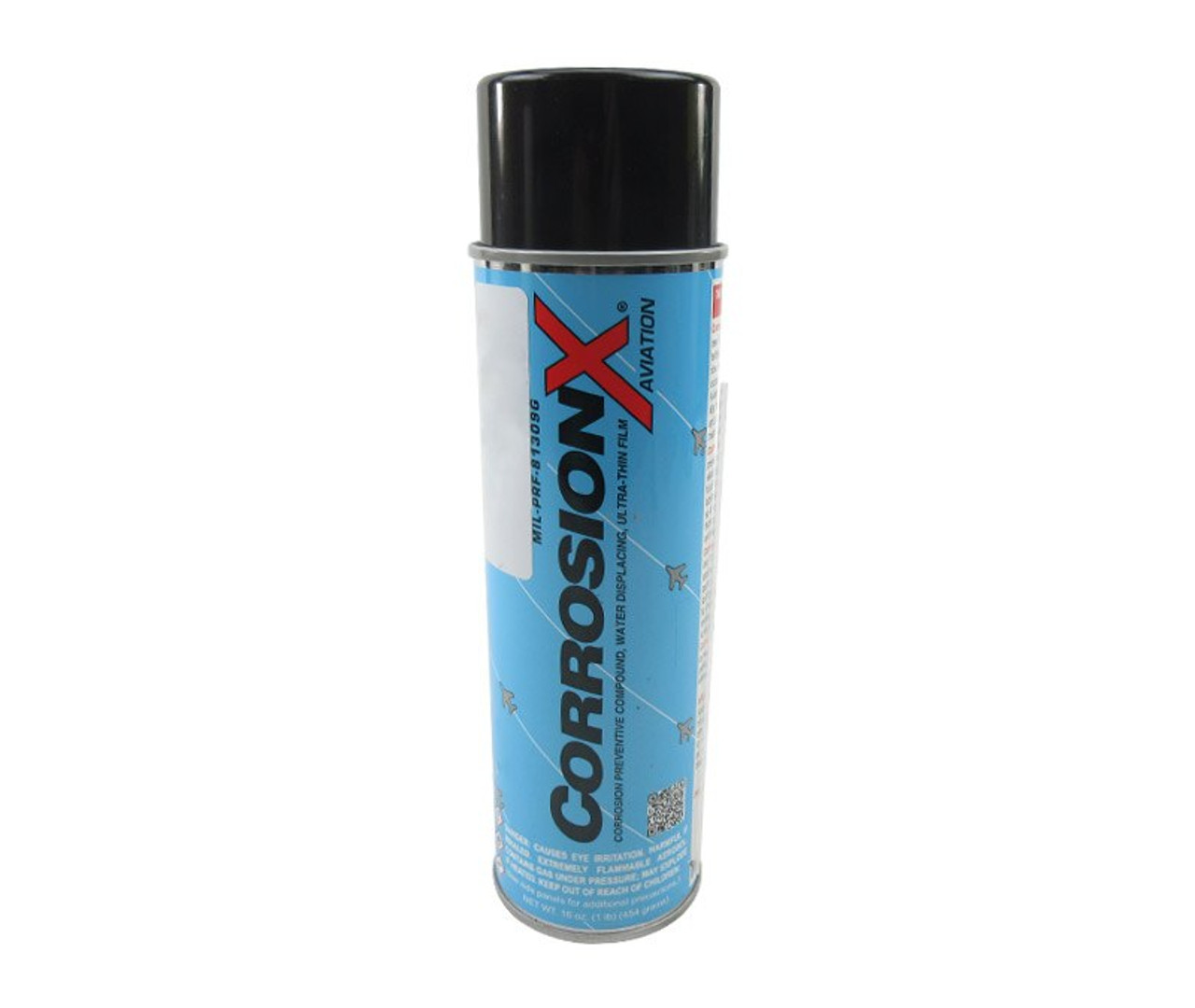
You are here: HomeShop by BrandCorrosion Technologies CorporationCorrosion Technologies CorrosionX Aviation, 16 Oz. Can, MIL-PRF-81309F

Corrosion Technologies CorrosionX Aviation, 16 Oz. Can, MIL-PRF-81309F

Corrosion Technologies CorrosionX Aviation, 16 Oz. Can, MIL-PRF-81309F
Corrosion Technologies CorrosionX Aviation, 16 Oz. Can, MIL-PRF-81309FCorrosion Technologies CorrosionX Aviation, 16 Oz. Can, MIL-PRF-81309FCorrosion Technologies CorrosionX Aviation, 16 Oz. Can, MIL-PRF-81309FCorrosion Technologies CorrosionX Aviation, 16 Oz. Can, MIL-PRF-81309F


This is a HAZMAT product.

Note: This is item has been deemed a Hazmat/Dangerous item by D.O.T. Additional Hazmat Fees levied by our Freight Carrier are reflected in the shipping cost in our Freight Calculator at the time of checkout.

Calculate Shipping Costs
Item #:761866801025
Availability:
Usually ships the same business day.
Guarantee your order ships out today (US ONLY)
($2.99):   Yes   No
(Order must be placed by 3PM Eastern on any business day. Does not include shipping costs)
Item Rating:
Price:$13.99
Add the Manufacturer's Certification:
$10.00
Quantity:
Send Page to Friend
Corrosion is a problem you can’t afford to ignore!

Left untreated, corroded areas quickly become extremely expensive to repair. They will certainly diminish the value of your airplane. And selling an airplane infected with corrosion could be difficult – if not impossible.

Corrosion is simply oxidation. It happens whenever metal and moisture come together. It can’t be stopped permanently, but it can be controlled. The most effective way to control it is to get rid of electrolytes that cause it.

CorrosionX takes corrosion control to a new level. Featuring the latest advances in Fluid Thin Film Coating (FTFC) Technology, it is specially designed to displace moisture, stop corrosion on contact and provide long-lasting protection.

CorrosionX penetrates through any oxidation, displaces electrolyte and leaves behind an ultra-thin fluid film that stops electrolysis. It contains no wax, tar, silicone or other solids that could interfere with visual inspections. It dissipates over time, leaving no residual buildup.

CorrosionX, unlike wax-based products, is a superb penetrant. It creeps into the tiniest crevices and cracks, between skin laps, and around screws and rivets. Whenever moisture goes, CorrosionX goes and displaces it. It is also an unsurpassed lubricant for teleflex cables, locks and hinges. And it can be applied to cannon plugs, micro-switches, antenna bases, circuit breakers, connectors and pins. With a dielectric strength of nearly 30KV, it is exceptional in its ability to stop electrolysis between dissimilar metals.

MADE IN THE USA, CorrosionX meets Mil-C-81309E, Type II (NSN 8030-01-438-4093) for application to airframes and is used extensively by the military.

Fluid Thin Film Coating

Fluid Thin Film Coating (FTFC) Technology

What it is and How it works Even though our Fluid Thin Film products may look and feel like ordinary oil, there's nothing ‘ordinary’ about them. They are made up of more than a dozen different components, each designed for a specific purpose. The end result is remarkable… products that stop and prevent corrosion. They creep, penetrate, lubricate, are dielectric and displace moisture.

Fluid Thin Film Coating Defined Corrosion Technologies Corporation coined the term “Fluid Thin Film Coating” to describe the basic technology found in all our anti-corrosion products and to distinguish them from barrier coatings or wax-based sealants commonly used as corrosion inhibitors. They are not sealants, contain no wax, tar, silicone or solids and leave no sticky, gummy mess behind. Polar Bonding with metal surfaces makes CorrosionX cling like a magnet and resist being washed away. The film creeps and spreads until it reaches a minimum thickness of .0003".

Controlling the Corrosion Process A corrosion cell is similar to a tiny battery. There is an anode, cathode, electrolyte and a path of current. Eliminate any one of these elements and you can shut down the process. FTFC doesn't stop with just one, it removes two: it displaces electrolyte and leaves an ultra-thin dielectric film that blocks the path of current. And, because of its film thickness, it won't interfere with circuitry.

Material Safety Data Sheets (MSDS)
  • Color: Brown
  • Appearance: Clear
  • Odor: Fresh Scent
  • Specific Gravity @ 15.6°C: 0.880
  • Viscosity, cSt @ 40°C: 47.3
  • Viscosity, cSt @ 100°C: 7.0
  • Flash Point c.o.c. : >132°C
  • Volume Solids: >90%
  • Film Thickness: 0.0004" in typ.
  • pH: NA
  • Vapor Pressure @ 38°C: 1mm Hg.
  • Solubility in Water: Slightly Emulsifiable
  • Boiling Point: >200°C
  • Weight per Gallon: 7.1 lbs.

    Performance Properties

      Corrosion Protection:
    1. Salt Spray, hrs: 96 as per ASTMB-117
    2. Film Thickness: 0.19 mils
    3. Humidity Cabinet, hrs.: 1320 as per ASTMD-1748
  • Electrical: Dielectric Strength >39,000V as per ASTMD-877
  • Lubrication: Anti-Wear 0.40 mm* as per ASTMD-4172 *Note: The smaller the number, the better the performance. A standard lubricating oil of the same viscosity would yield a value of 1.0 – 1.2 mm.

    Shelf Life

  • Bulk: Indefinite (as long as container remains capped).
  • Aerosols: 3 years
  • Rubber: No visible effect on Buna-N, Viton or Neoprene products. Slight swelling and/or softening of butyl rubber items.
  • Adhesives and Sealants: Usually no effect but some adhesives may soften and sealants with silicone may experience slight swelling. Recommend a small test sample prior to widespread application.
  • Painted Surfaces: Paints typically used on aircraft, automobiles and machinery are unaffected by CorrosionX. Polishes and some wax coatings may soften by the application of any hydrocarbon product.
  • Plastics: CorrosionX is compatible with most commonly-encountered plastics such as: Acrylic, Polyester, Nylon, Vinyl, Delrin, Teflon, Formica, Polyethylene and Polypropylene. Should there be any question when other types of plastics are involved, it is suggested a small sample be tested.
  • Fabrics: CorrosionX will be absorbed into the fibers of most fabrics, thereby creating slight staining. The stain is not permanent and may be removed with naphtha or mineral spirits.
  • Q: How much will it cost to have my airplane treated with CorrosionX?

    A: For a single-engine airplane the cost varies from $200 to $350, depending on the complexity of the airplane. Twins, turboprops and jets are, of course, more expensive. Contact the Treatment Center nearest you for an exact quote.

    Q:How long does the treatment take and how long does it last?

    A: Treatments take from two to four hours for singles and light twins and last two years or more, depending on exposure to the elements.

    Q:Some promote the use of wax coatings. Any comments?

    A: All types of anti-corrosion products have been tested by the military in real world situations and use of CorrosionX by them and other U.S. Government agencies is constantly expanding.

    Q:Should I treat my airplane before or after painting?

    A: After. CorrosionX is petroleum-based and can’t be painted over. Following treatment, wait six months to a year before painting.

    Q:Will it harm paint, Plexiglas, plastic, etc.?

    A: No. It will not stain or etch paint or harm rubber, except butyl (natural) or silicone types. Rule of thumb: if material to be treated is affected by hydrocarbons, CorrosionX should be used with caution.

    Q:Will CorrosionX harm electronics?

    A: We don’t recommend applying it directly to radio gear, but it should have no adverse effects.

    Q:I heard that CorrosionX loosens rivets. Is this true?

    A: If rivets should loosen after treatment, it’s only because oxidation has been removed. Tests by Hackney Laboratories, a division of Trinity Industries, proved conclusively there is no significant different in the strength of riveted panels that were treated with CorrosionX and untreated panels.

    Our Customers are Saying